Wondering whether an older home or a newer one makes more sense in Coalinga? It is a smart question, especially in a market where housing age, repair history, and energy performance can affect both your monthly costs and your long-term peace of mind. If you are comparing homes around downtown with properties in later subdivisions, this guide will help you weigh the tradeoffs clearly and confidently. Let’s dive in.
Coalinga Has Both Older And Newer Housing
Coalinga is still mostly a single-family home market. According to the city’s housing element, single-family detached homes made up 65.7% of the housing stock in 2020, and more than 62% of the city’s homes are over 30 years old.
That means many buyers here are not just choosing a home. You are also choosing between different eras of development. In Coalinga, that often means comparing older homes near the original core and downtown with newer homes in post-1980 subdivisions.
Where Older And Newer Homes Are Located
Older residential areas are generally clustered around the original core and downtown. The city describes these areas as a mix of older single-family homes, smaller multifamily buildings, accessory units, and detached structures on lots.
Newer development is concentrated more in the northeast and southeast parts of Coalinga. Much of this later housing growth followed the 1983 earthquake, which damaged or destroyed hundreds of homes and buildings and shaped how the city rebuilt.
For you as a buyer, location and age often go together in Coalinga. A home’s setting may tell you a lot about its likely layout, systems, and update history.
Older Homes Often Offer More Variety
Older homes in Coalinga’s core areas may have smaller or more varied floor plans because they reflect earlier building patterns. You may find different lot sizes, less standardized layouts, and a wider mix of home styles.
That variety can be a plus if you want something that feels less cookie-cutter. At the same time, older homes can come with more unknowns, especially if repairs or additions were completed over many years.
It is also important not to assume that an older-looking home is fully original. Some homes were rebuilt or significantly remodeled after 1983, so the year built does not always tell the full story.
Newer Homes May Bring More Predictability
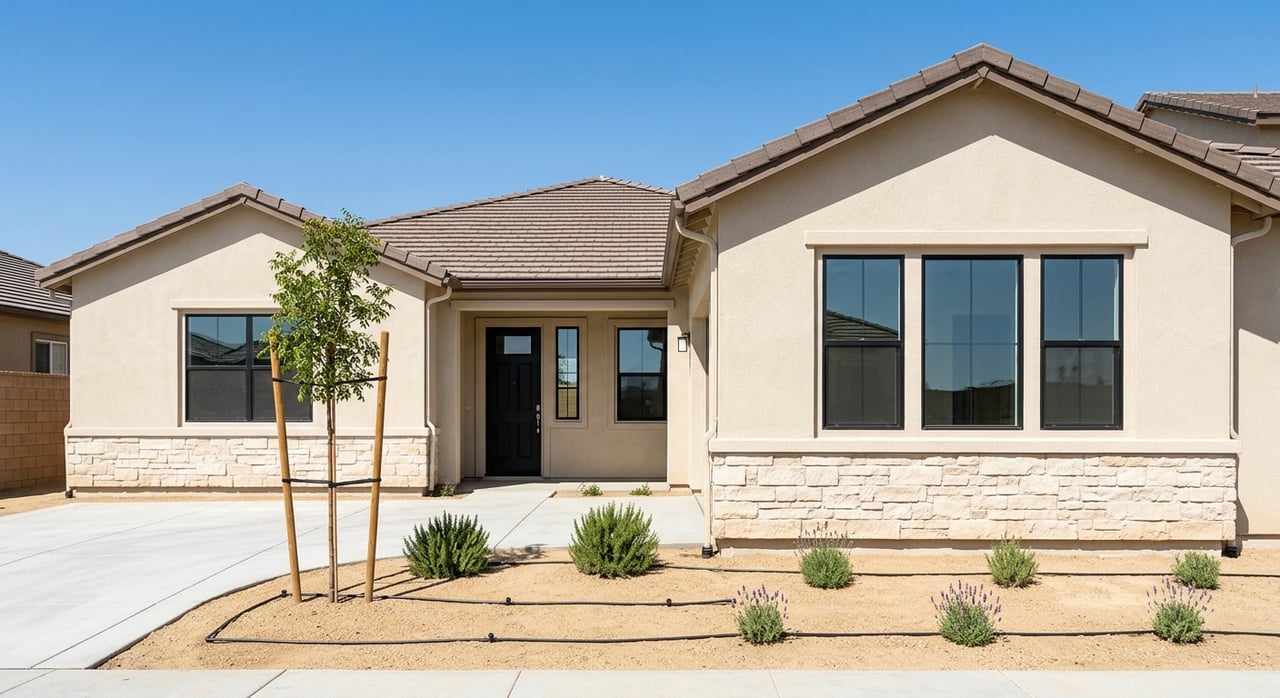
Newer subdivision homes in Coalinga are more likely to follow the standardized layouts common in later tract construction. For many buyers, that can mean a more predictable floor plan and fewer immediate repair surprises.
Newer homes may also be closer to current building and energy standards, especially if they were built or renovated under more recent California code requirements. That does not automatically make every newer home the better choice, but it does give you a useful starting point when comparing maintenance and efficiency.
Energy Efficiency Matters In Coalinga
In Coalinga, energy performance is not a small detail. NOAA climate data shows an annual mean temperature of 65.9°F, average highs of 100.8°F in July and 100.3°F in August, and annual precipitation of 8.18 inches.
In plain terms, Coalinga is hot, dry, and cooling-heavy. That makes attic insulation, air sealing, windows, roof condition, and HVAC performance especially important when you are comparing older and newer homes.
What To Check In An Older Home
Older homes may be more likely to have less efficient windows or insulation, depending on whether upgrades have been completed. The U.S. Department of Energy notes that single-pane glazing is common in older buildings, while newer efficient buildings typically use double- or triple-pane units.
ENERGY STAR says air sealing and insulation can save an average of 15% on heating and cooling costs. In a place like Coalinga, that can make a noticeable difference in your comfort and utility bills.
If an older home has not had wall insulation added, drill-and-fill insulation may be one possible improvement method. The key is to look beyond the age of the house and focus on how the home actually performs today.
Why Newer Homes May Have An Efficiency Edge
Coalinga’s Building Division enforces California Building and Energy Codes as adopted by the city. California’s 2025 Energy Code took effect on January 1, 2026 for new buildings and major renovations, increasing efficiency requirements for new single-family homes and improving standards for exterior walls and windows.
That means newer homes and recently renovated homes may have an advantage when it comes to energy-saving features. Still, a well-updated older home can sometimes compete very well if the owner invested in insulation, windows, roofing, and HVAC.
Maintenance Is Often The Biggest Difference
One of the biggest tradeoffs between older and newer homes is maintenance risk. Older homes typically bring more variation in the condition of the roof, HVAC system, plumbing, electrical service, and foundation.
In Coalinga, that matters even more because many of the big-ticket repairs buyers worry about are the same items the city permits. The Building Division handles permits for re-roofing, foundation repair or replacement, electrical, plumbing, and mechanical upgrades, plus major structural work.
For you, that means the home’s permit history can be very valuable. It can show whether important work was done and whether improvements may have been completed with city review.
Earthquake History Should Be Part Of Your Review
In Coalinga, seismic history is part of the older-versus-newer conversation. The 1983 earthquake nearly destroyed more than 300 homes and damaged another 691 buildings.
Because of that history, it is wise to ask for documentation of structural repairs, retrofits, or post-earthquake rebuilding. A home built before 1983 may still be a strong option, but you should look for records that show what was repaired or improved rather than making assumptions based on age alone.
Permits Can Tell You A Lot
If you are seriously considering an older home, permit research is one of the smartest steps you can take. Coalinga’s Building Division maintains historical permit and plan archives, which can help clarify what is original and what was added, repaired, or replaced later.
This can be especially useful if you are trying to verify:
- roof replacement history
- foundation repair work
- electrical or plumbing upgrades
- HVAC replacement or mechanical work
- major remodels or structural changes
A permit trail does not answer every question, but it can reduce guesswork. That is especially helpful in a market where some older homes have been rebuilt or improved over time.
Lead Paint Is A Key Checkpoint For Older Homes
If a home was built before 1978, federal lead-based paint disclosure rules apply. For older Coalinga homes that have not been fully renovated, buyers should verify the required disclosures and ask whether past remodeling was completed using lead-safe practices.
This does not mean you should avoid every older home. It simply means you should be informed and ask clear questions during your due diligence.
Price Differences Often Reflect More Than Age
Price expectations in Coalinga can vary depending on the data source and the property itself. Zillow reported the city’s typical home value at $296,636 as of May 31, 2026, while Redfin reported a three-month median sale price of $317,810 and a median sale price per square foot of $229 for May 2026.
Redfin also described Coalinga as somewhat competitive, with homes taking an average of 69 days to sell over that period. That gives buyers a helpful reminder that price, pace, and negotiation room can all depend on condition and location.
A useful local benchmark from the city’s housing element shows a median single-family and condominium home price of about $290,000 in 2021-22. The same report noted that some smaller older homes near the central commercial area and southeastern corner were priced around $199,900 to $235,000 in a 2022 market survey.
The practical takeaway is simple. Older homes may come in below citywide median benchmarks, but they may also require more immediate spending on repairs, efficiency upgrades, or structural work.
How To Compare Value The Right Way
When you compare an older home and a newer home in Coalinga, focus on the total picture instead of the list price alone. A lower-priced older home may still be the better value if it has solid permits, updated systems, and strong energy performance.
On the other hand, a newer home priced closer to or above the local median may offer savings in maintenance, repairs, and cooling costs. In Coalinga, condition, permit history, and efficiency often matter just as much as age.
Here are a few questions to keep in mind as you compare options:
- Has the roof been replaced, and was it permitted?
- Have the electrical, plumbing, or HVAC systems been upgraded?
- Are the windows single-pane or multi-pane?
- Is there evidence of insulation or air sealing improvements?
- Was any post-1983 structural repair or rebuilding documented?
- How much work will you need to do in the first one to three years?
Which Type Of Home Fits You Best?
If you want character, a lower entry price, or an opportunity to improve a property over time, an older home may be a strong fit. This can also appeal to buyers who do not mind planning for repairs or updates.
If you want a more predictable layout, newer systems, and potentially better efficiency from day one, a newer home may be the easier path. That can be especially helpful if you want fewer moving parts in your first years of ownership.
There is no one-size-fits-all answer in Coalinga. The best choice depends on your budget, your comfort with repairs, and how much value you place on efficiency, location, and long-term upkeep.
Buying in Coalinga is easier when you have local guidance that helps you look past surface details and focus on what really matters. If you want help comparing older and newer homes, reviewing value, or planning your next move, schedule a consultation with Johanna Rue-Duval Arroyo.
FAQs
What is the main difference between older and newer homes in Coalinga?
- Older homes in Coalinga are often located near the original core and downtown and may have more varied layouts, while newer homes are more common in the northeast and southeast parts of the city and often have more standardized floor plans.
Are older homes in Coalinga usually cheaper?
- Some smaller or less-updated older homes may be priced below citywide median benchmarks, but the true cost depends on condition, repair needs, energy efficiency, and permit history.
Why does energy efficiency matter so much for Coalinga homes?
- Coalinga has a hot, dry climate with July and August average highs around 100°F, so insulation, windows, roof condition, air sealing, and HVAC performance can have a major impact on comfort and cooling costs.
What should buyers check before purchasing an older Coalinga home?
- Buyers should review permit history, ask about roof, foundation, plumbing, electrical, and HVAC updates, verify any post-1983 repair or rebuilding records, and confirm required lead-based paint disclosures if the home was built before 1978.
Can an older Coalinga home still be a good buy?
- Yes. An older home can be a strong value if it has been well maintained, properly updated, and supported by clear permit records and solid energy performance.
Do newer homes in Coalinga always cost more?
- Not always, but newer post-1980 homes are more likely to price near or above current local median benchmarks because they often offer newer systems and better efficiency.